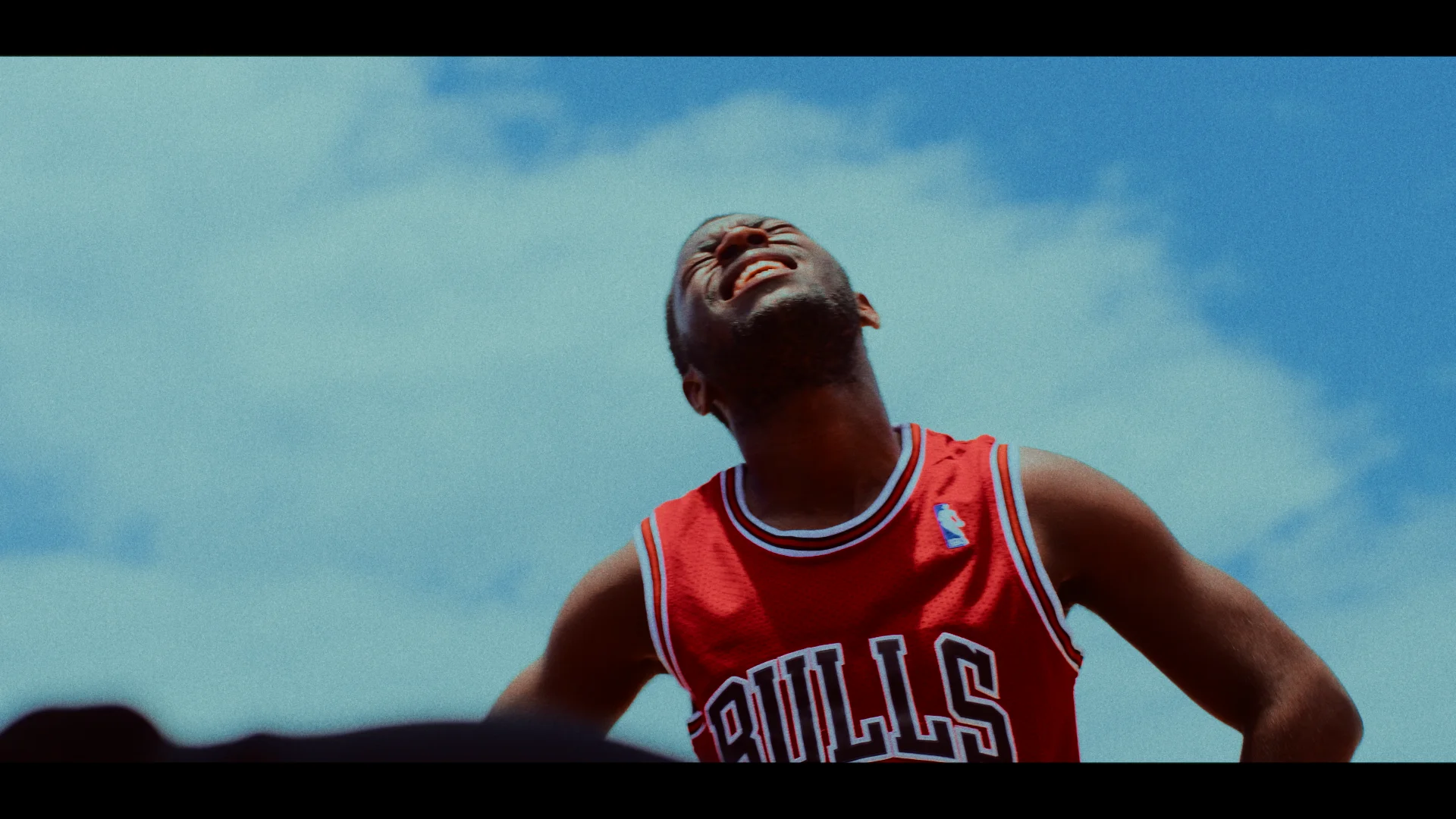
Behind the story: writing TROUBLE
Every version of TROUBLE started from the same sentence: give a young man the simplest job in the world, then make it impossible. Pick up a car. Drive it across town. Drop it off. That is the entire assignment — and the whole film is what happens in the gap between how easy it sounds and how completely it comes apart.
Our lead, Trouble, is babyfaced and hungry to prove himself. He has finally been handed something by his boss that he cannot mess up, which is precisely why he cannot stop thinking about messing it up. The stakes are not the size of the job; they are what the job means. This is his shot at belonging to a world that has not decided yet whether it wants him.
We wanted the comedy and the dread to live in the same breath — for a scene to be funny and frightening at once, so you are never quite sure whether to laugh or hold your breath. The rule we kept coming back to: if something feels too easy, either there is a catch or you are meant to get caught. Trouble learns that the hard way.
The Jamaica of the film is not a backdrop. The speech, the humor, the social codes, the way a small favor can carry an enormous debt — all of it shapes what Trouble can and cannot do at every turn. We wrote the world first and let the plot fall through it.
That is as much as we will say about the story itself. The best part of TROUBLE is the thing waiting for Trouble in that car, and we are not about to spoil it here.